
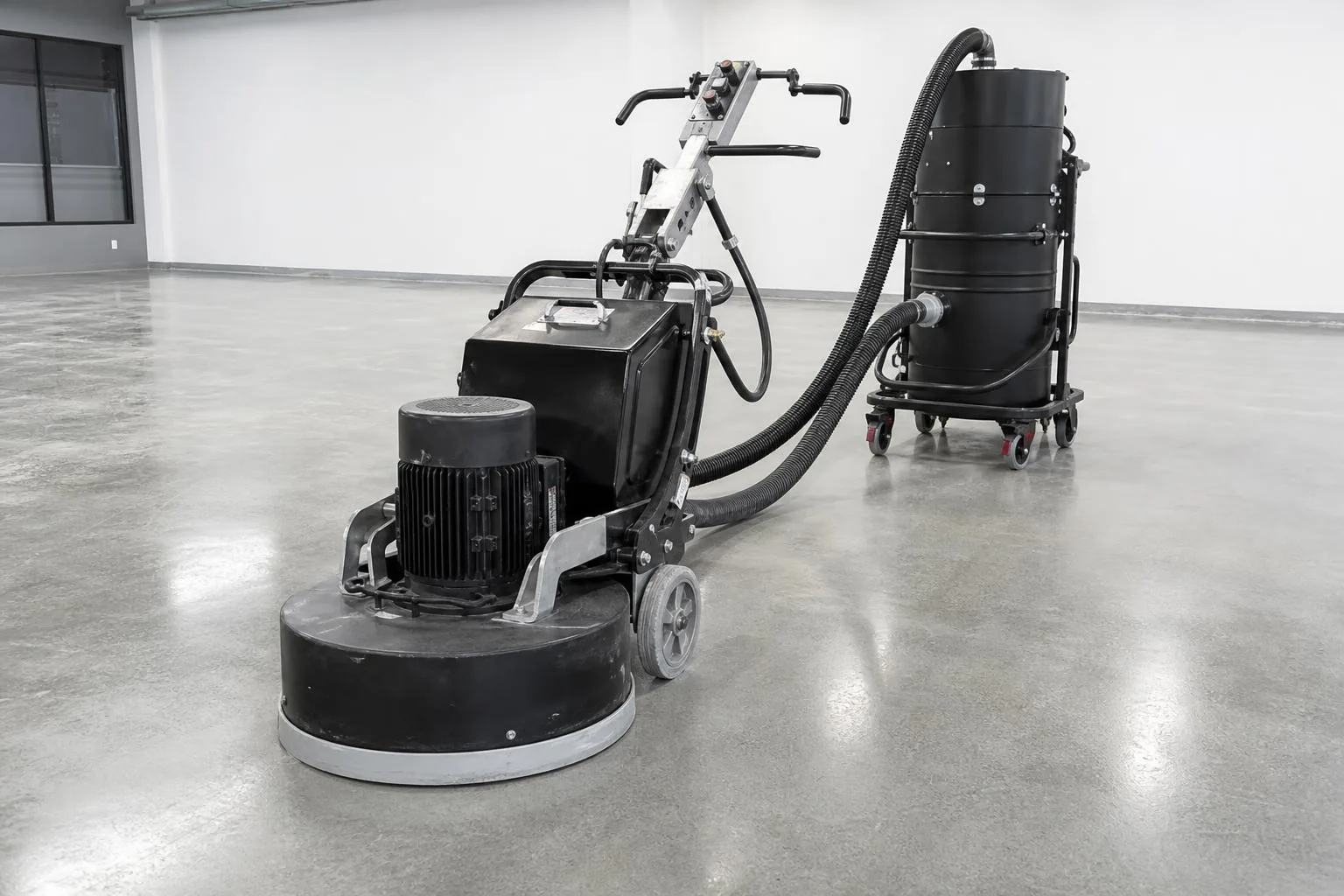
Grinding concrete releases respirable crystalline silica, a fine dust that OSHA regulates because long-term exposure can cause lung disease. Safe floor prep uses diamond grinders connected to HEPA dust extraction, wet methods where practical, and a written exposure control plan, so occupied homes and businesses stay clean during the work.
What Is Silica Dust and Why Does Concrete Grinding Create It?
Concrete is made from sand, gravel and cement, and the sand and stone contain crystalline silica, most often quartz. When a diamond grinder, saw or shot blaster cuts into the surface, it breaks some of that silica into particles small enough to be inhaled deep into the lungs. This fine fraction is called respirable crystalline silica.
The >Occupational Safety and Health Administration identifies respirable crystalline silica as a cause of silicosis, lung cancer, chronic obstructive pulmonary disease and kidney disease in exposed workers. That is why grinding concrete, the most common surface preparation step before epoxy, polishing or new flooring, is treated as a regulated task rather than a casual cleanup job.
Where silica exposure happens during floor work
- Diamond grinding to remove coatings, adhesives and the weak top layer of a slab
- Shot blasting and scarifying for a rougher surface profile
- Cutting or chasing cracks and control joints before repair
- Dry sweeping after grinding, which puts settled dust back into the air
What OSHA Requires for Concrete Grinding
OSHA’s silica standard for construction (29 CFR 1926.1153) sets a permissible exposure limit of 50 micrograms of respirable crystalline silica per cubic meter of air, averaged over an eight-hour shift. Contractors can comply either by measuring exposure or by following the engineering controls listed for specific tasks in the standard’s Table 1.
Key requirements contractors follow
- Engineering controls first. For walk-behind grinders, that means water delivery or a dust collection system with a filter efficiency of 99% or greater, according to OSHA’s Table 1 guidance.
- A written exposure control plan that describes the tasks, controls and housekeeping methods.
- Housekeeping limits. Dry sweeping and compressed air are restricted when they create silica exposure. HEPA vacuuming is the accepted method.
- Respiratory protection when controls alone are not enough, plus medical surveillance for workers who must wear respirators 30 or more days a year.
These rules protect the crew, but they also protect you. Dust that escapes the work area settles on shelving, HVAC returns and furniture.
Dust Control Methods Compared
There are two main ways to control dust during concrete floor preparation. Each has a place.
| Method | Best for | Trade-offs |
|---|---|---|
| Dry grinding with HEPA extraction | Coating prep, occupied buildings, basements | Needs a properly sized vacuum and filter maintenance |
| Wet grinding | Heavy stock removal, some polishing steps | Creates slurry that must be collected and disposed of correctly |
| Shot blasting with integrated collector | Large open warehouse slabs | Not ideal near walls; edges need a hand grinder |
For most coating jobs, dry grinding with a shroud and a HEPA extractor is the cleanest choice because it leaves a dry surface ready for primer the same day.
Protecting Occupied Homes and Businesses During Floor Prep
Many projects happen while people are still using the building: offices, retail stores, schools and family homes. Good planning keeps the rest of the space clean.
Practical steps we use
- Seal doorways and HVAC returns in the work zone with plastic sheeting.
- Run the dust extractor exhaust away from occupied areas.
- Use edge grinders with shrouds so perimeter work is controlled too.
- HEPA vacuum the slab and surrounding surfaces before coating begins.
- Schedule the heaviest grinding outside business hours when that is possible.
Our floor preparation page explains how grinding fits into the larger prep process.
Why Proper Prep Still Matters More Than Shortcuts
Some contractors skip grinding and acid etch instead because it creates less dust. The problem is that etching does not remove sealers, paint or weak surface paste, and it leaves a less consistent profile. Coatings applied over poorly prepared concrete are far more likely to peel.
The >Portland Cement Association and coating manufacturers consistently point to surface preparation as the foundation of a durable floor. Controlled grinding gives you both a strong bond and a clean jobsite.
Questions to ask your contractor
- What grinding equipment and dust extractor will you use?
- Do you have a written silica exposure control plan?
- How will you protect the rest of the building?
- How will the area be cleaned before coating?
What a Clean, Safe Floor Prep Day Looks Like
Homeowners and facility managers often ask what to expect on grinding day. On a well-run job, the process is loud but tidy, and very little dust leaves the work zone.
Before grinding
The crew walks the space, covers doorways and returns, removes loose debris and checks power. Large grinders often need a dedicated 220-volt circuit or a generator, and dust extractors are set up next to each machine with fresh filters and bags.
During grinding
Operators watch the vacuum gauge and change bags before the extractor loses suction. Edges and corners are handled with smaller shrouded grinders connected to their own vacuum. If the crew sees visible dust escaping a shroud, work stops until the seal is fixed.
After grinding
The slab is HEPA vacuumed, sometimes twice, and wiped where needed before primer goes down. Bags of collected dust are sealed and removed from the building. The result is a uniform, open surface profile that gives the coating something solid to grab, without a film of fine dust on everything else in the room.
If you are planning a larger project in Broomfield or anywhere along the US-36 corridor, it helps to share your building’s occupancy schedule early so the heaviest grinding can be planned around it.
Why Broomfield Property Owners Choose True Finishing
True Finishing has prepared, repaired and finished concrete floors across the Colorado Front Range and mountain towns since 2007. Our crews work in Broomfield and nearby communities, and we handle every step ourselves: moisture testing, grinding, crack and joint repair, and the final finish. That one-stop approach means nobody hands off a slab they did not prepare.
Every grinder we run is paired with a HEPA dust extractor sized for the machine, and we plan containment before the first pass, whether the job is an occupied office in Broomfield or a residential basement. You can see how we approach larger jobs in our commercial case studies.
Ready to talk about your floor? Request a free estimate or call 303-761-1012. We will look at the slab, test it, and give you a written scope with clear pricing.
Frequently Asked Questions
Is concrete grinding dust dangerous?
Yes, if it is not controlled. Concrete grinding releases respirable crystalline silica, which OSHA links to silicosis, lung cancer and other diseases after repeated exposure. Professional crews reduce the risk with shrouded grinders, HEPA dust extraction, wet methods and proper cleanup, so homeowners and building occupants are not exposed to airborne dust.
What is the OSHA silica limit for construction?
OSHA sets a permissible exposure limit of 50 micrograms of respirable crystalline silica per cubic meter of air, averaged over an eight-hour day, under its construction standard 29 CFR 1926.1153. Employers either measure exposure or follow the specified control methods in Table 1 of the standard for tasks such as grinding.
Can I stay in my house while my garage or basement is ground?
Usually yes. With HEPA dust extraction, sealed doorways and covered HVAC returns, very little dust leaves the work area. Most homeowners stay home during garage and basement prep. Your contractor should explain the containment plan before work starts and let you know about noise levels during grinding.
Is wet grinding better than dry grinding?
Neither is always better. Wet grinding controls dust well but creates slurry that must be collected and disposed of, and the slab must dry before coating. Dry grinding with a high-efficiency extractor leaves the floor ready for primer sooner, which is why it is common for epoxy and coating preparation.
Does True Finishing use dust control on every job?
Yes. True Finishing pairs grinders with HEPA dust extractors and plans containment for every project, from residential garages to occupied commercial buildings. We clean with HEPA vacuums rather than dry sweeping. Call 303-761-1012 to schedule a free estimate and walkthrough of your floor.