
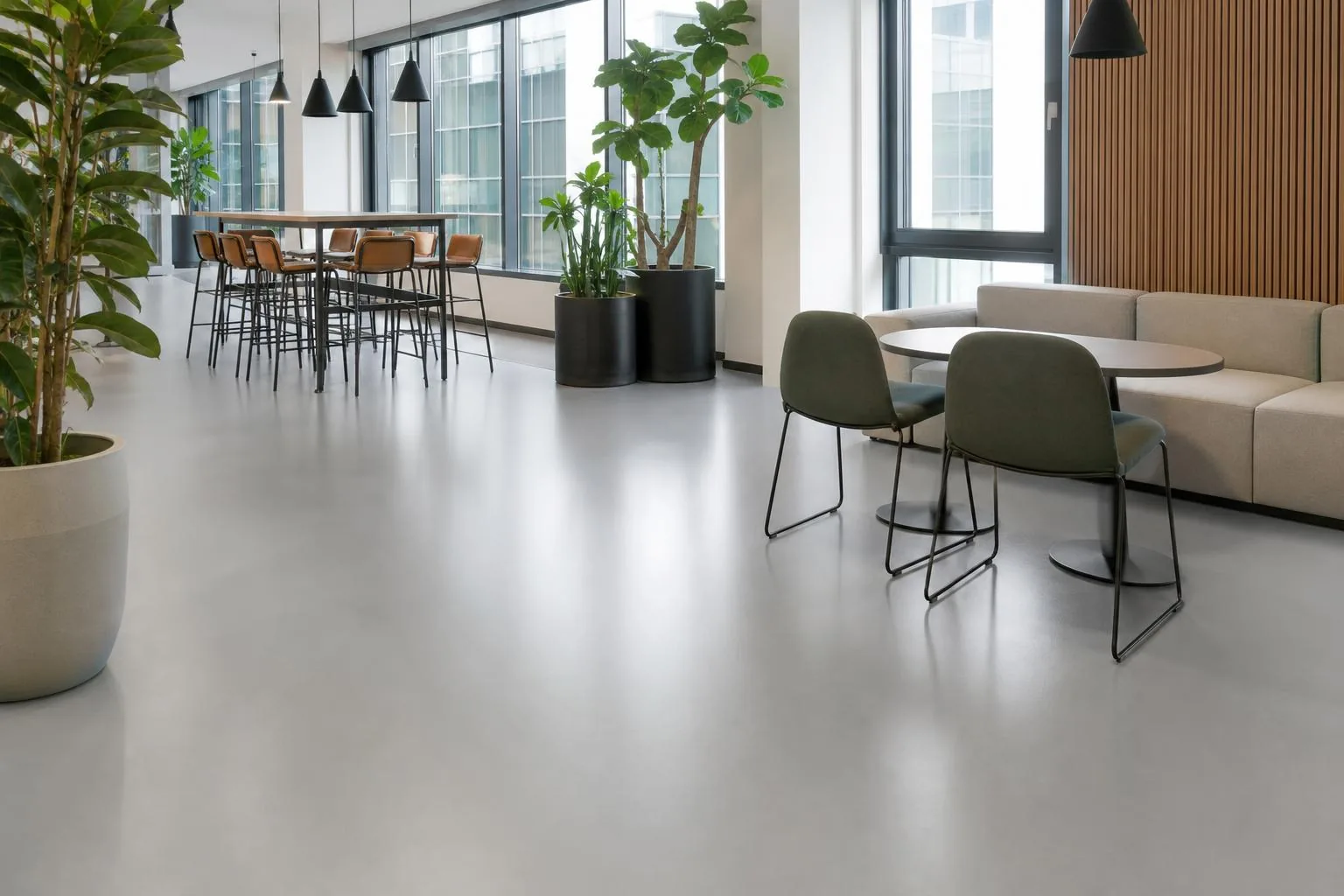
Low-VOC floor coatings release fewer volatile organic compounds into indoor air during and after installation. For concrete floors, 100%-solids epoxies and many water-based products are low in VOCs, while some solvent-based sealers are much higher. Good ventilation and proper cure time further limit odor and exposure in occupied homes and offices.
What Are VOCs and Why Do They Matter for Floors?
Volatile organic compounds are carbon-based chemicals that evaporate at room temperature. Many paints, sealers and coatings release them as they dry. The >U.S. Environmental Protection Agency notes that indoor air can contain higher levels of some pollutants than outdoor air, and that products like paints and coatings are common indoor VOC sources.
For floor coatings, VOCs matter in two ways. First, they create the strong odor people associate with new coatings. Second, high-VOC products can affect people with sensitivities during application and curing.
Comparing Common Concrete Floor Coatings
| Product type | Typical VOC profile | Notes |
|---|---|---|
| 100%-solids epoxy | Very low; almost no solvent | Thick build, mild odor, strong bond |
| Water-based epoxy | Low | Thinner film; good for light duty and primers |
| Polyaspartic | Varies by formula; low-VOC versions exist | Fast cure, UV-stable topcoat |
| Solvent-based acrylic sealer | Often high | Strong odor, thin film, frequent recoats |
| Penetrating silicate densifier | Very low | Used in polished concrete, not a film |
Always check the product data sheet and safety data sheet. VOC content is usually listed in grams per liter.
Why “solids” matters
A 100%-solids coating means nearly everything you apply stays on the floor as cured film. Lower-solids products contain carrier liquids, water or solvent, that evaporate. That is one reason 100%-solids epoxy is popular for both performance and indoor air.
Ventilation and Cure: The Other Half of the Equation
Even low-VOC products have some odor during curing, especially in enclosed basements. A good installation plan includes:
- Fresh air exchange with fans directed to the outdoors
- Closing HVAC returns in the work area during application
- Keeping occupants out for the manufacturer’s recommended re-entry time
- Maintaining correct temperature so the coating cures fully rather than lingering
A coating that cures properly reaches its final properties and stops off-gassing much sooner than one applied in a cold, damp space.
Low-VOC Options for Homes, Offices and Schools
Residential basements and garages
A 100%-solids epoxy base with a low-VOC polyaspartic topcoat is a common choice. It is durable and the odor typically fades quickly with ventilation.
Occupied offices and retail
Polished concrete with a silicate densifier and a water-based guard is one of the lowest-odor finishes available. See our concrete polishing page for how that process works.
Schools and healthcare
Owners often specify products that meet green building or indoor-air programs. Industry groups such as >AMPP publish coating standards that specifiers use alongside manufacturer VOC data.
Questions to Ask Before You Choose a Coating
- What is the VOC content of each layer in grams per liter?
- Is the base coat 100% solids?
- How long before people and pets can return?
- How will the space be ventilated during work?
- Can the work be scheduled after hours or over a weekend?
Our epoxy flooring page lists the systems we install for residential and commercial spaces.
Performance: Do Low-VOC Coatings Hold Up?
A common worry is that “low-VOC” means “less durable.” For concrete floors, that is often the opposite of the truth. Many of the most demanding environments, including commercial kitchens, hospitals, laboratories and manufacturing plants, run on low-solvent epoxy and urethane systems every day. What separates a long-lasting floor from a short-lived one is usually the thickness of the film, the quality of the bond and the surface preparation underneath, not the amount of solvent in the can.
100%-solids epoxy is a performance product
Because nearly all of the material stays on the floor, a single coat of 100%-solids epoxy builds a much thicker film than a solvent-based or water-based coat applied at the same rate. Thicker film generally means better resistance to abrasion, impact and hot tires.
Water-based products have a role
Water-based epoxies are useful as primers, for light-duty areas and for spaces where odor must be kept to a minimum. They are thinner and typically need more coats to build the same protection.
Polyaspartic topcoats
Polyaspartics provide excellent UV stability and abrasion resistance. Formulas vary widely in VOC content, so reviewing the data sheet is important if indoor air is a priority.
The bottom line
The best low-VOC floor is one that is applied correctly over a well-prepared slab and lasts a long time, because every recoat is another round of odor and disruption. Durability and indoor air goals usually point toward the same choices: good prep, 100%-solids base coats and carefully selected topcoats.
Why Arvada Property Owners Choose True Finishing
True Finishing has prepared, repaired and finished concrete floors across the Colorado Front Range and mountain towns since 2007. Our crews work in Arvada and nearby communities, and we handle every step ourselves: moisture testing, grinding, crack and joint repair, and the final finish. That one-stop approach means nobody hands off a slab they did not prepare.
Many of our Arvada clients are coating floors in homes with kids and pets or in offices that stay open during work, so we discuss product chemistry, ventilation and re-entry times up front. You can see how we approach larger jobs in our commercial case studies.
Ready to talk about your floor? Request a free estimate or call 303-761-1012. We will look at the slab, test it, and give you a written scope with clear pricing.
Frequently Asked Questions
Is epoxy flooring safe once it cures?
Yes. Once a professional epoxy system has fully cured according to the manufacturer, it is an inert plastic surface used in homes, hospitals and food facilities. Most odor and VOC release happens during application and early curing, which is why ventilation and following re-entry times matter during installation.
What is the lowest VOC concrete floor finish?
Polished concrete treated with a silicate densifier is among the lowest-VOC finishes because it relies on mechanical grinding rather than a thick film. Among coatings, 100%-solids epoxies and many water-based products are very low in VOCs. Always confirm with the product data sheet for the specific materials used.
Does 100% solids epoxy have VOCs?
True 100%-solids epoxy contains little or no solvent, so its VOC content is very low, though it still has a mild odor during curing. Some products labeled high-solids contain added solvent. Check the data sheet for the VOC value in grams per liter rather than relying on marketing language.
How long should I stay out of a newly coated room?
It depends on the product and temperature. Many systems allow light foot traffic in 12 to 24 hours, but people with chemical sensitivities may prefer to wait longer while ventilation clears residual odor. Your installer should give you a written re-entry and full-cure schedule for your specific system.
Does True Finishing offer low-VOC flooring options?
Yes. True Finishing installs 100%-solids epoxy systems, low-VOC polyaspartic topcoats and polished concrete for homes and businesses in Arvada and across the Front Range. We review product data with you before starting. Call 303-761-1012 to schedule a free estimate.