
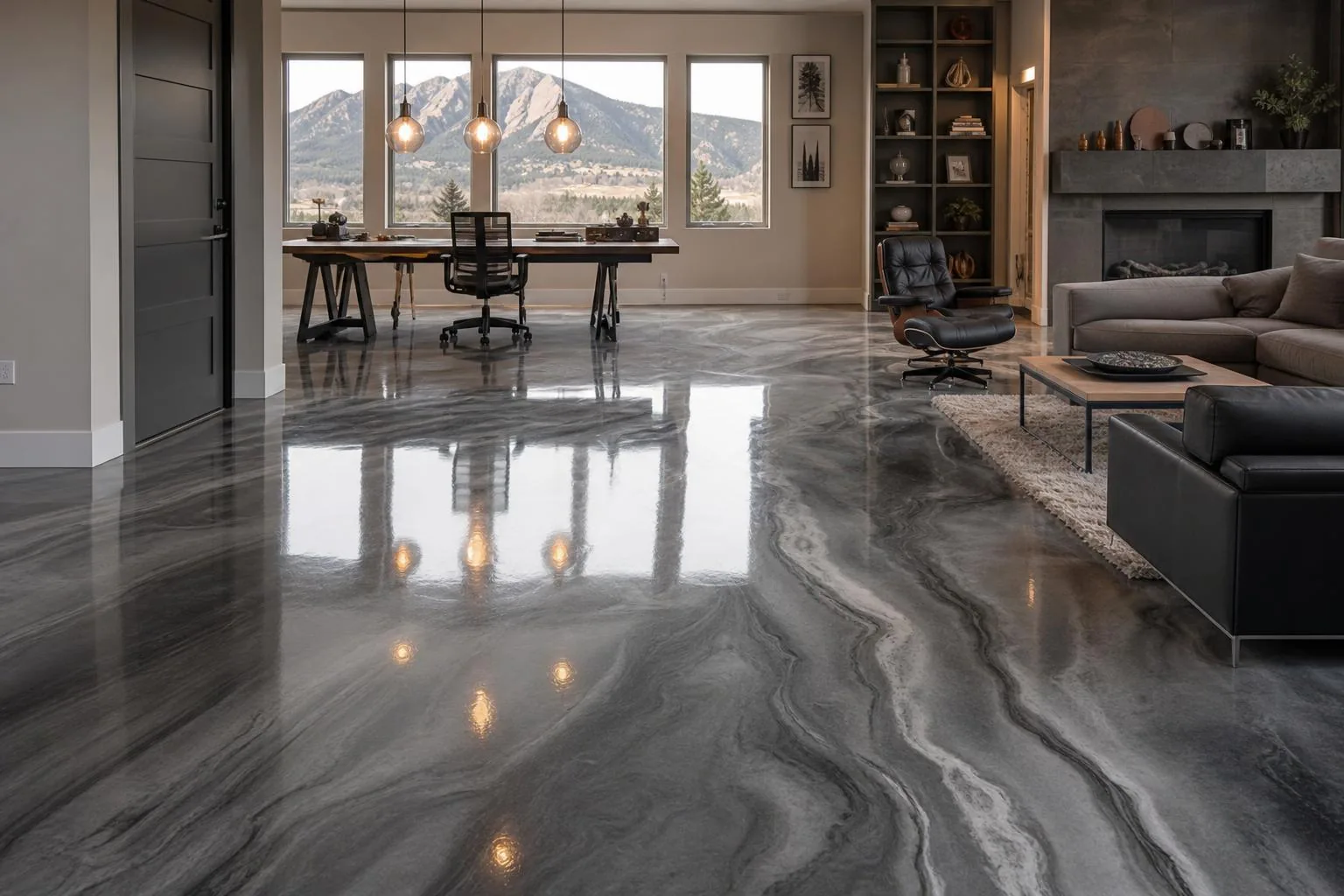
A metallic epoxy floor uses pearlescent pigments mixed into clear epoxy, moved by hand while wet to create depth, swirls and a marbled or liquid-metal look. Over a properly ground slab with a hard topcoat, it is durable for homes, bars and showrooms. As a typical Front Range estimate for 2026, it runs about $7 to $12 per square foot.
How Metallic Epoxy Floors Are Made
Metallic epoxy starts as a clear, 100%-solids epoxy mixed with metallic or pearlescent pigments. The applicator pours it over a primed base coat, spreads it, then manipulates the wet material with rollers, brushes, trowels, solvent sprays or air to move the pigments. As the epoxy levels and cures, the pigments settle into ripples, cells and veins that catch light from different angles.
No two metallic floors are identical. The look depends on pigment choice, application technique and the installer’s hand. That is part of the appeal and also why experience matters.
Typical layer build
- Diamond grind and repair the slab
- Primer coat for bond
- Tinted base coat, usually dark or complementary
- Metallic epoxy coat, manipulated for the design
- Clear topcoat, often polyaspartic or urethane, for scratch and UV resistance
Where Metallic Epoxy Works Best
- Homes: basements, bars, theaters, offices, kitchens and showpiece garages
- Retail and hospitality: boutiques, salons, tasting rooms and restaurants
- Showrooms: automotive, furniture and design spaces
- Offices: lobbies and conference rooms where design matters
It is less suited to heavy industrial floors with forklifts or abrasive traffic, where a high-build or mortar system performs better.
Durability: What to Expect
The metallic layer is protected by a clear topcoat, and that topcoat takes the wear. With a hard urethane or polyaspartic topcoat, metallic floors handle normal residential and light commercial traffic well. Like any glossy floor, they can show fine scratches from grit, so entry mats and regular dust mopping matter.
| Concern | How it performs | How to manage it |
|---|---|---|
| Scratches | Visible on high gloss | Hard topcoat, mats, felt pads |
| UV yellowing | Epoxy can amber in sunlight | UV-stable topcoat |
| Stains | Very resistant | Wipe spills promptly |
| Hot tires | Possible in garages | Use garage-rated topcoat |
Design Choices: Colors and Patterns
Color palettes
Popular combinations include charcoal and silver, white and pearl, bronze and copper, ocean blues and earthy greens. Pairing a darker base with lighter metallics creates the most depth.
Pattern styles
- Marble: veining that mimics natural stone
- Lava or cells: organic cell patterns from solvent or heat manipulation
- Ripple or wave: directional movement following roller strokes
- Subtle pearl: soft sheen with minimal movement for a calmer look
Ask to see physical samples and completed floors, since photos rarely capture how metallic pigments shift with light.
Metallic Epoxy Cost (Front Range 2026)
As a typical Front Range estimate for 2026, metallic epoxy floors cost about $7 to $12 per square foot including standard grinding and repair. Complex multi-color designs, extensive crack repair, moisture mitigation and small or detailed rooms can push the price higher.
- 300 sq ft basement bar: about $2,100 to $3,600
- 600 sq ft office or showroom: about $4,200 to $7,200
- Three-car showpiece garage: about $5,000 to $8,500
Air Quality and Installation Day
Metallic systems use 100%-solids epoxy, which is low in solvent, but some applicators use alcohol sprays to create cells. Ventilation during installation is important. The >EPA indoor air quality guidance recommends increasing fresh air when using products that release VOCs. Most homeowners can return to the space after the topcoat has cured according to the manufacturer.
The >Portland Cement Association provides background on concrete surfaces and moisture that explains why grinding and testing are essential before any decorative coating.
Caring for a Metallic Floor
Sweep or dust mop daily in busy areas, clean with a pH-neutral cleaner and a microfiber mop, and use felt pads under furniture. Avoid dragging heavy items. When traffic lanes dull after years of use, a new clear topcoat restores the depth without redoing the metallic layer. Learn more about our systems on the epoxy flooring page.
Lighting makes the floor
Metallic floors change with lighting. Natural daylight brings out soft movement, while directional pendants and track lights create dramatic highlights. Consider the room’s lighting plan when choosing colors, and look at samples under similar light before deciding.
Common metallic epoxy mistakes
- Skipping the base coat color plan: the base color shows through thin areas and changes the final look.
- Working too slowly: metallic epoxy has a limited working time, and late manipulation leaves visible lap marks.
- Poor lighting during install: crews need strong, low-angle work lights to see the pattern as it develops.
- No topcoat: a metallic layer without a hard clear topcoat scratches and dulls quickly.
- Ignoring temperature: cold slabs thicken the epoxy and change how pigments flow, so the room should be held within the product range before and during the pour.
An experienced installer avoids these mistakes by planning the layout, staging materials and assigning enough crew to finish each section while it is still workable.
Why Boulder Property Owners Choose True Finishing
True Finishing has prepared, repaired and finished concrete floors across the Colorado Front Range and mountain towns since 2007. Our crews work in Boulder and nearby communities, and we handle every step ourselves: moisture testing, grinding, crack and joint repair, and the final finish. That one-stop approach means nobody hands off a slab they did not prepare.
Boulder clients often want something distinctive, from home offices and studios to tasting rooms and retail, and metallic epoxy lets us create a one-of-a-kind floor over an existing slab. You can see how we approach larger jobs in our commercial case studies.
Ready to talk about your floor? Request a free estimate or call 303-761-1012. We will look at the slab, test it, and give you a written scope with clear pricing.
Frequently Asked Questions
How much does a metallic epoxy floor cost?
As a typical Front Range estimate for 2026, metallic epoxy floors cost about $7 to $12 per square foot including grinding and standard repairs. Complex designs, heavy slab repair, moisture mitigation and small detailed spaces can raise the price. An on-site evaluation gives the most accurate quote.
Are metallic epoxy floors durable?
Yes, with proper prep and a hard topcoat. Metallic floors handle residential and light commercial traffic well and resist stains. Like other high-gloss floors, they can show fine scratches, so mats, felt pads and regular dust mopping help. The topcoat can be renewed to restore gloss.
Can metallic epoxy be used in a garage?
Yes, but choose a garage-rated system with a topcoat designed for hot tires and road salt. Metallic garages look stunning but show dust and scratches more than flake floors. Many homeowners use metallic in showpiece garages and flake in daily-use garages.
How long does metallic epoxy take to install?
Most residential metallic floors take two to four days, including grinding, primer, base coat, metallic coat and topcoat. Foot traffic is usually allowed about a day after the final coat, with furniture returning a few days later depending on products and temperature.
Does True Finishing install metallic epoxy in Boulder?
Yes. True Finishing designs and installs metallic epoxy floors in Boulder homes and businesses and across the Front Range. We provide samples, grind and repair the slab and apply a protective topcoat. Call 303-761-1012 or request a free estimate.