
Self-leveling concrete is a cement-based underlayment that flows out to create a flat, smooth surface over an uneven slab or subfloor. It is used before tile, vinyl, wood or coatings when a floor is out of tolerance. As a typical Front Range estimate for 2026, professional installation runs about $3 to $8 per square foot depending on depth and prep.
What Is Self-Leveling Concrete?
Self-leveling concrete, often called self-leveling underlayment or SLU, is a polymer-modified cementitious material mixed with water to a pourable consistency. Once poured, it flows and finds its own level with minimal troweling. Most products allow light foot traffic within a few hours and flooring installation within a day or two, depending on thickness and the finished floor.
It is not the same as structural concrete. SLU is designed to correct flatness and smoothness, not to carry structural loads or fix a slab that is actively moving.
Underlayment vs. topping
- Underlayments are covered by another floor: tile, LVP, carpet, wood or a coating.
- Self-leveling toppings are designed to be the wear surface, sometimes polished or sealed.
When Does a Floor Need Self-Leveling?
Flooring manufacturers set flatness tolerances. When a slab falls outside them, self-leveler is often the fastest way to fix it.
- Large-format tile, which needs very flat floors to avoid lippage
- Click-lock vinyl plank or laminate over dips and humps
- Old slabs with worn traffic lanes or removed tile mortar ridges
- Additions where new and old slabs meet at different heights
- Commercial spaces before resilient flooring or thin coatings
Our concrete leveling page explains how we assess flatness.
How Self-Leveling Concrete Is Installed
- Assess and test. Measure flatness, check moisture and identify cracks or movement.
- Prepare the surface. Grind to remove contaminants, adhesives and weak paste. See our floor preparation process.
- Repair and dam. Fill cracks, block drains and openings, and set dams at edges.
- Prime. Apply the manufacturer’s primer so the leveler bonds and does not lose water into the slab.
- Mix and pour. Mix to exact water ratios and pour continuously to avoid cold joints.
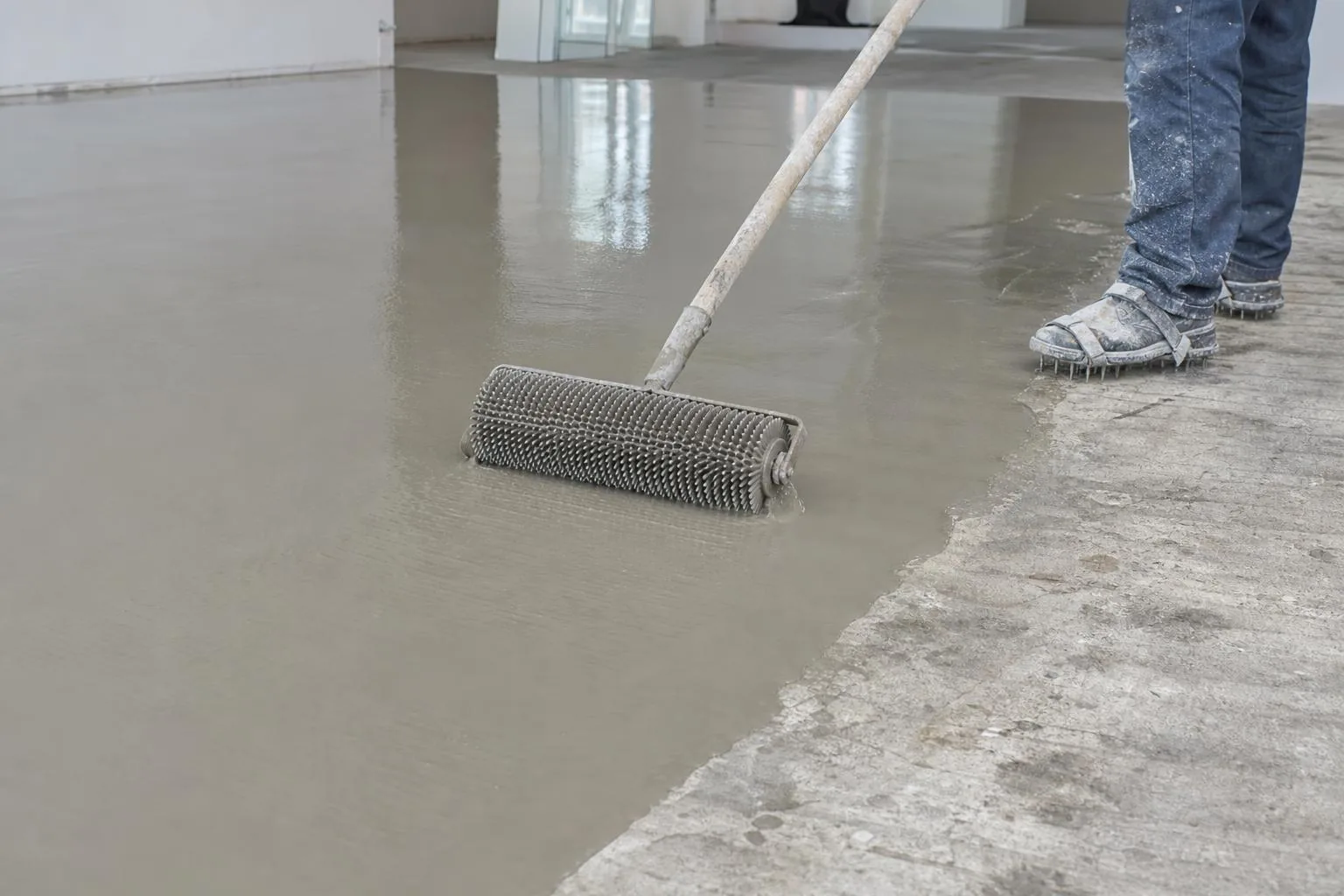
- Spread and smooth. Use a gauge rake and spiked roller to set depth and release air.
- Cure and verify. Protect from drafts and direct sun, then check flatness before flooring.
Self-Leveling Concrete Cost (Front Range 2026)
| Scope | Typical cost per sq ft | Notes |
|---|---|---|
| Thin skim, 1/8 to 1/4 inch | $3 to $5 | Smoothing over a mostly flat slab |
| Typical leveling, 1/4 to 1/2 inch | $4 to $7 | Most residential and tenant projects |
| Deep fills or sloped corrections | $6 to $8+ | May need aggregate extension or multiple lifts |
These are typical Front Range estimates and include grinding and primer. Material cost rises with depth, so measuring before pricing matters.
Common Mistakes That Cause Failures
Skipping primer
Unprimed concrete can pull water out of the leveler too quickly, causing pinholes, weak surfaces and poor bond.
Too much water
Adding extra water makes the material flow easier but weakens it and can cause dusting, shrinkage cracks and segregation.
Pouring over moisture problems
Most underlayments are not moisture barriers. High slab moisture can damage adhesives above the leveler. Testing with methods like >ASTM F2170 comes first.
Ignoring cracks and joints
Moving joints will reflect through the leveler. They must be honored or treated per the manufacturer’s instructions.
Self-Leveler vs. Grinding vs. Patching
Not every uneven floor needs a full pour. Grinding high spots works when the problem is a few ridges. Patching works for isolated dips. Self-leveling is best when unevenness is widespread or when you need a uniformly smooth surface for large tile or resilient flooring.
The >American Concrete Institute defines floor flatness measurement methods used on commercial projects, which many specifiers reference when setting tolerances.
Planning Around Your Schedule
Self-leveling is often on the critical path between demolition and new flooring. Most products accept tile within a day and moisture-sensitive flooring after the manufacturer drying time, which varies with thickness, temperature and humidity. Northern Colorado winters slow curing, so heated spaces help keep schedules on track.
Coordinating with other trades
On remodels and tenant finishes, the leveling crew sits between demolition and the flooring installer. Clear communication avoids delays and finger-pointing:
- Share the flooring product and its flatness and moisture requirements before the pour.
- Confirm finished floor heights at doors, transitions and appliances so nothing ends up too high.
- Keep other trades off the pour during curing, including painters and electricians rolling carts.
- Document flatness readings after cure so the installer knows the floor is within tolerance.
Temperature and airflow during curing
Most self-leveling products list a minimum and maximum substrate and air temperature. Drafts from open doors and direct sunlight through windows can make the surface dry too quickly and crack, while very cold slabs slow strength gain. In Northern Colorado, that often means closing the space, controlling heat, and keeping fans from blowing directly on fresh material during the first hours.
Why Loveland Property Owners Choose True Finishing
True Finishing has prepared, repaired and finished concrete floors across the Colorado Front Range and mountain towns since 2007. Our crews work in Loveland and nearby communities, and we handle every step ourselves: moisture testing, grinding, crack and joint repair, and the final finish. That one-stop approach means nobody hands off a slab they did not prepare.
We pour self-leveling underlayments for homeowners, flooring installers and general contractors in Loveland and across Northern Colorado, with the grinding and priming done in-house so the pour bonds and cures as designed. You can see how we approach larger jobs in our commercial case studies.
Ready to talk about your floor? Request a free estimate or call 303-761-1012. We will look at the slab, test it, and give you a written scope with clear pricing.
Frequently Asked Questions
How much does self leveling concrete cost per square foot?
As a typical Front Range estimate for 2026, professional self-leveling runs about $3 to $8 per square foot, including grinding and primer. Thin skims are at the low end, while deep fills or slope corrections cost more because material use rises quickly with depth. Measuring the floor first gives a reliable price.
How thick can self leveling concrete be poured?
It depends on the product. Many self-leveling underlayments can be poured from a feather edge up to about 1 to 1.5 inches in one lift, and some allow deeper pours when extended with aggregate. Always follow the manufacturer limits, since exceeding them can cause cracking and long drying times.
Can you put self leveling concrete over old concrete?
Yes. Old concrete is the most common substrate. It must be mechanically cleaned to remove adhesives, sealers, paint and weak surface paste, then primed with the manufacturer primer. Cracks and joints are treated first, and moisture is tested so the leveler and the flooring above it perform properly.
How long does self leveling concrete take to dry?
Many products accept foot traffic in two to four hours and tile within about a day. Moisture-sensitive flooring such as vinyl or wood often needs longer drying, based on thickness and conditions. Cold temperatures and high humidity slow drying, so heated, ventilated spaces help keep projects on schedule.
Does True Finishing pour self leveling concrete?
Yes. True Finishing grinds, primes and pours self-leveling underlayments for homes and commercial spaces in Loveland, Fort Collins and across the Front Range. We verify flatness before handing the floor to the next trade. Call 303-761-1012 to request a free estimate.