
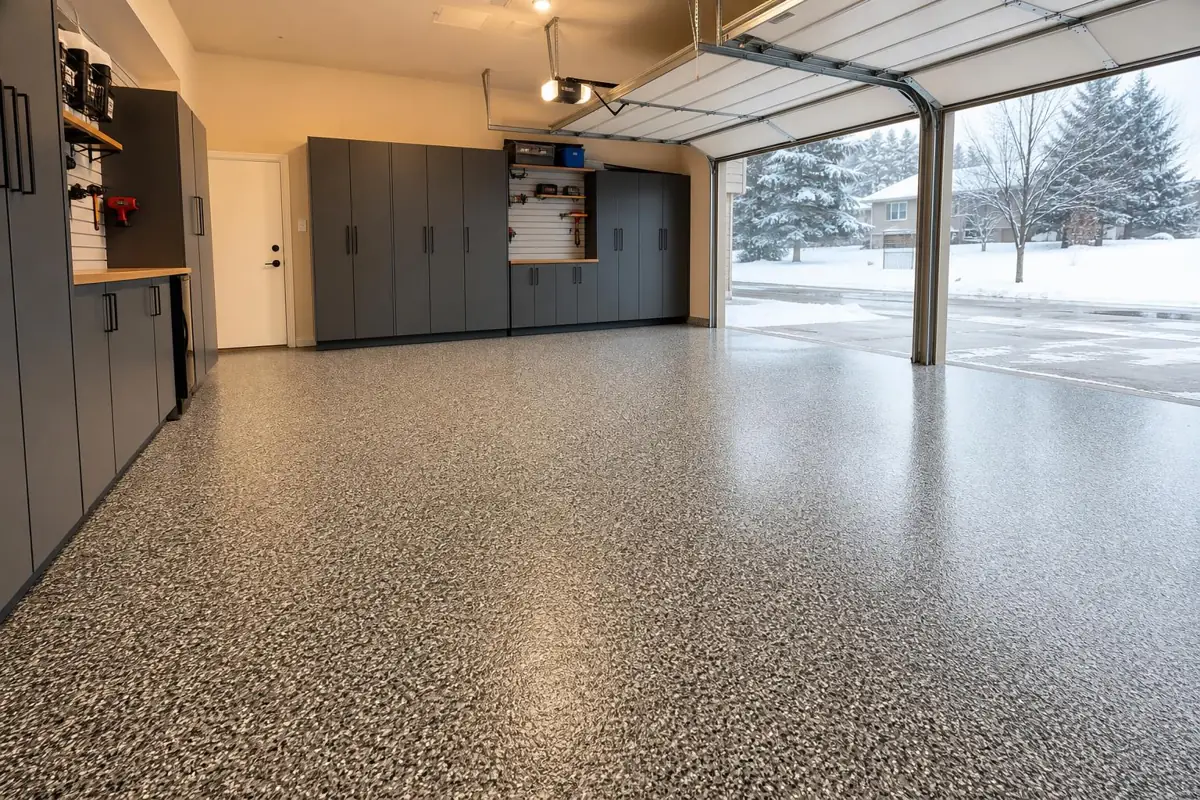
A flake epoxy garage floor is a coating system where colored vinyl chips are broadcast into a wet epoxy or polyaspartic base, then sealed with a clear topcoat. Full-broadcast flake hides dust and imperfections, adds texture for traction and resists road salt. It is the most popular professional garage floor in Colorado.
How a Flake Epoxy Garage Floor Is Built
A professional flake system is several layers working together:
- Surface preparation: diamond grinding, crack repair and cleaning.
- Base coat: pigmented epoxy or polyaspartic that bonds to concrete.
- Flake broadcast: vinyl chips thrown into the wet base until it is fully covered.
- Scrape and clean: excess flake is removed and the surface is scraped smooth.
- Clear topcoat: a polyaspartic or urethane topcoat locks in the flake and adds UV and abrasion resistance.
The flake layer adds thickness and texture, which is why full-broadcast systems feel more substantial than plain painted floors.
Full Broadcast vs. Partial Broadcast
| Option | Look | Performance |
|---|---|---|
| Full broadcast | Flake covers the entire floor, terrazzo-like | Best at hiding dirt; most durable; added texture |
| Medium broadcast | Base color shows between chips | Moderate hiding; less texture |
| Light broadcast | Sparse flecks on solid color | Shows dust and scratches more |
Most Colorado homeowners choose full broadcast because it hides the sand, salt film and tire marks that come with winter.
Choosing Flake Size and Color
Flake size
- 1/4 inch: the classic garage look, good hiding and texture
- 1/8 inch or micro: finer, more uniform look, popular in modern homes
Color blends
- Gray, black and white: the most popular; hides almost everything
- Tan, brown and cream: warm and forgiving with Colorado dust
- Blue or accent blends: for showpiece garages and shops
Lighter blends make garages feel brighter but show dark tire marks. Mid-tone blends are the most forgiving. Look at samples in your garage’s own lighting.
Texture and Traction
Snowmelt makes any smooth garage floor slick. Flake floors have natural texture from the chips, and installers can control how much texture remains by how the floor is scraped and how many topcoats are applied. An optional anti-slip additive in the topcoat adds more grip near the door and on steps.
The >National Weather Service Denver/Boulder office forecasts the snow events that bring meltwater into garages across Douglas County, and a textured topcoat is a simple safeguard for those days.
Flake Floors and Road Salt
Liquid de-icers used on Colorado highways, described by the >Colorado Department of Transportation, end up on garage floors every storm. A sealed flake floor keeps that brine on the surface, where it can be squeegeed and rinsed. Bare concrete absorbs it, which can contribute to scaling over time. Our epoxy flooring page explains the topcoats we use for salt resistance.
Getting Your Garage Ready for Thanksgiving Guests
Thanksgiving week often turns the garage into extra parking, a beverage station or a place for the second refrigerator. A few simple steps get a flake floor guest-ready:
- Blow or sweep out leaves and grit from the fall.
- Mop with warm water and a pH-neutral cleaner.
- Rinse any white salt film from early storms.
- Put a mat by the house door to catch meltwater.
- Use drip trays under coolers and extra refrigerators.
Long-term care
Flake floors need little maintenance. Avoid acidic cleaners, use plywood under jack stands, and refresh the topcoat if traffic lanes dull after years of use. Most owners find the floor looks nearly new after a simple wash.
Typical cost
As a typical Front Range estimate for 2026, professional full-broadcast flake floors cost about $5 to $8 per square foot including grinding and minor crack repair. A three-car garage in Parker commonly falls between about $3,500 and $5,600.
Questions to ask before you book
- Will the floor be diamond ground, and how will cracks be repaired?
- Is the base coat epoxy or polyaspartic, and what is the topcoat?
- Is the flake broadcast full, medium or light?
- Are stem walls and steps included?
- When can I walk on it, and when can I park?
- What does the warranty cover?
Flake floors beyond the garage
The same system works well in basements, laundry rooms, mudrooms, home gyms and covered patios when the right topcoat is used. Many Parker homeowners coat the garage and the mudroom at the same time so the finish runs continuously from the car to the house, with one easy-to-clean surface catching snow, mud and salt before it reaches the rest of the home.
Scheduling around the holidays
Late November is a popular time to book because homeowners want the garage finished before winter storage and guests. Fast-curing polyaspartic topcoats help keep installs on schedule when temperatures drop. Booking a few weeks ahead gives you the best choice of dates, and most garages can be finished in two days so cars are back inside before the next storm.
Why Parker Property Owners Choose True Finishing
True Finishing has prepared, repaired and finished concrete floors across the Colorado Front Range and mountain towns since 2007. Our crews work in Parker and nearby communities, and we handle every step ourselves: moisture testing, grinding, crack and joint repair, and the final finish. That one-stop approach means nobody hands off a slab they did not prepare.
Parker and Douglas County garages often double as workshops, gyms and holiday overflow space, and flake systems give homeowners a floor that looks good and stays easy to clean all season. You can see how we approach larger jobs in our commercial case studies.
Ready to talk about your floor? Request a free estimate or call 303-761-1012. We will look at the slab, test it, and give you a written scope with clear pricing.
Frequently Asked Questions
What is a flake epoxy garage floor?
A flake epoxy garage floor is a multi-layer coating system where colored vinyl chips are broadcast into a wet epoxy or polyaspartic base coat, then sealed with a clear topcoat. It creates a speckled, terrazzo-like look, adds texture and thickness, and hides dirt and imperfections well.
Are flake floors slippery?
Full-broadcast flake floors have natural texture from the chips, which provides better traction than smooth coatings. When wet with snowmelt, any floor is slicker, so many homeowners add an anti-slip additive to the topcoat near entries and steps. Squeegeeing standing water also helps.
What flake color hides dirt best?
Mid-tone blends such as gray, black and white or tan, brown and cream hide dirt, dust, salt film and tire marks best. Very light blends show dark tire marks, and very dark blends show dust and salt residue. Seeing samples in your own garage lighting helps you choose.
How much does a flake garage floor cost?
As a typical Front Range estimate for 2026, professional full-broadcast flake floors cost about $5 to $8 per square foot, including grinding and minor crack repair. A two-car garage often falls between $2,250 and $3,600, and a three-car garage between $3,500 and $5,600.
Does True Finishing install flake floors in Parker?
Yes. True Finishing installs full-broadcast flake garage floors in Parker, Castle Rock and across the Front Range, with diamond grinding and UV-stable topcoats. Call 303-761-1012 or request a free estimate through our contact page.