
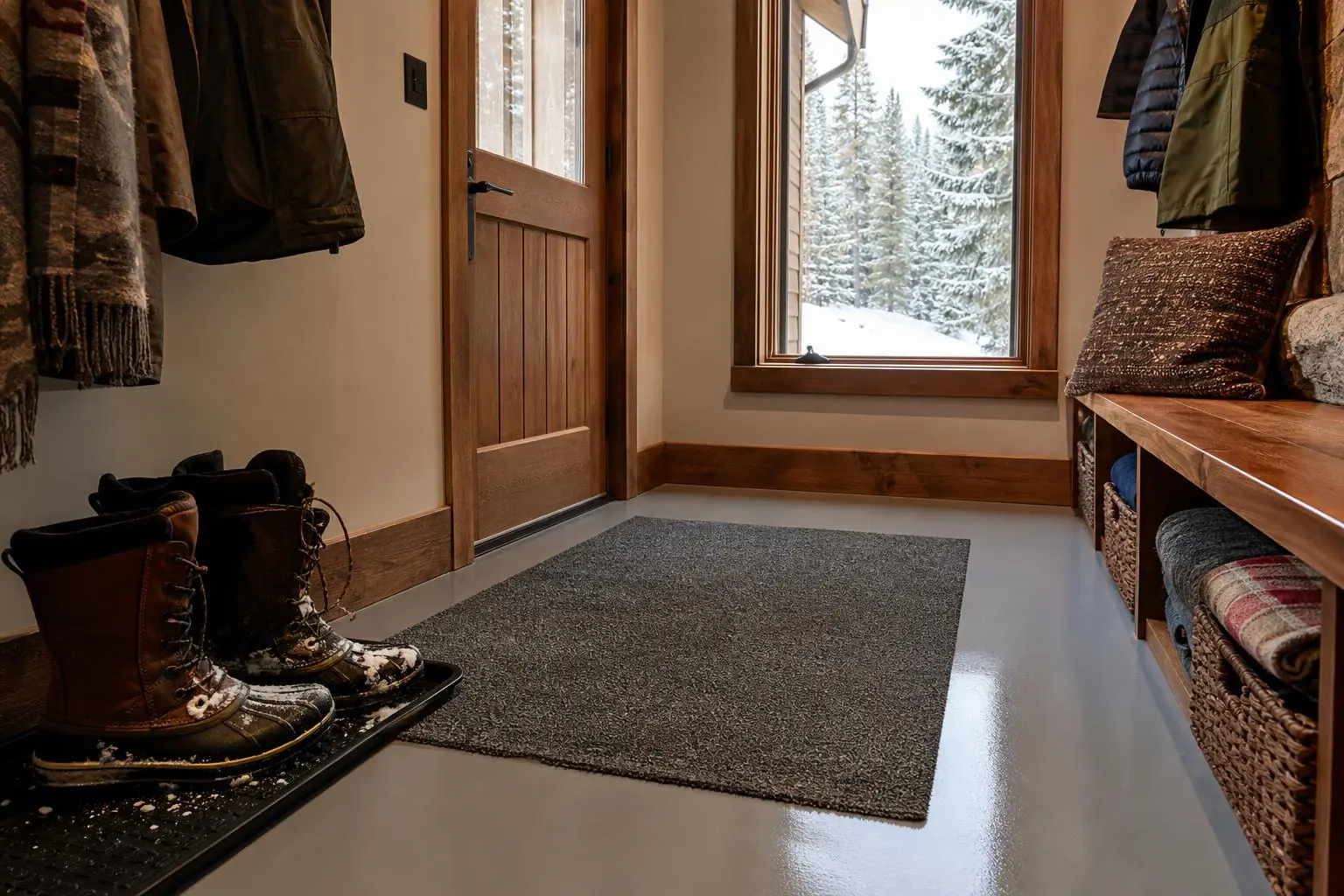
Winter floor care for epoxy and polished concrete comes down to controlling snowmelt and de-icer residue. Use entry mats, squeegee standing water, clean with a pH-neutral cleaner, and rinse salt film regularly. Avoid harsh acids and rock salt on interior floors, and add slip-resistant mats or texture where people walk in from snow.
Why Winter Is Hard on Floors in Colorado
Colorado winters bring frequent snow events, rapid freeze-thaw swings and lots of sand and de-icer on roads and walkways. The >Colorado Department of Transportation uses liquid de-icers and solid materials on highways during storms, and businesses and homeowners spread salt and ice melt on sidewalks. All of that gets tracked indoors.
On garage, mudroom and commercial entry floors, that mix leaves gritty sand that scratches finishes and a white salt film that dulls gloss and can make surfaces slick.
Daily and Weekly Care Routine
Daily
- Dust mop or vacuum sand and grit, which act like sandpaper underfoot.
- Squeegee standing meltwater toward drains or the garage door.
- Wipe up puddles at entries promptly.
Weekly
- Damp mop with a pH-neutral cleaner diluted per label instructions.
- Rinse garage floors with clean water to remove salt film.
- Shake out or clean entry mats so they keep working.
Epoxy vs. Polished Concrete: What Is Different?
| Care item | Epoxy / polyaspartic | Polished concrete |
|---|---|---|
| Main winter risk | Scratches from grit, salt film | Etching and staining from salts and acids |
| Cleaner | pH-neutral, non-abrasive | pH-neutral, designed for polished floors |
| Restoring shine | Recoat topcoat when worn | Burnish or re-polish, reapply guard |
| Avoid | Citrus or acidic cleaners, steel wool | Vinegar, acid cleaners, ice melt left sitting |
Choosing an Ice Melt That Is Kinder to Floors
Most ice melts end up inside somehow. Rock salt (sodium chloride) and calcium chloride are effective outdoors but leave residue that should be cleaned off interior floors promptly. Whatever you use outside, the practical answer indoors is the same: trap it at the door and rinse it off regularly.
For exterior concrete, the >Portland Cement Association provides guidance on how de-icers and freeze-thaw cycles contribute to scaling, which is useful when deciding what to spread on new concrete steps and walks.
Keeping Floors Safe When Wet
Any smooth hard floor can be slippery when wet. For homes, a broadcast flake epoxy with a textured topcoat, plus mats at entries, works well in mudrooms and garages. For businesses, the >OSHA walking-working surfaces standards require employers to keep floors clean and, so far as possible, dry, which in winter usually means walk-off mats, wet-floor signs and frequent mopping near doors.
Upgrades worth considering
- Anti-slip aggregate added to the topcoat in entry zones
- Recessed or heavy-duty walk-off matting at commercial doors
- Floor drains or slight slope corrections in garages
When to Call a Pro After Winter
Spring is a good time to look at your floor with fresh eyes. Dull traffic lanes, scratches near the door, or areas where salt has etched a polished floor can usually be fixed without replacing the whole floor. Our floor finishing team can recoat epoxy topcoats or re-polish and reguard concrete.
Mountain and Foothills Homes: Extra Considerations
Homes in Evergreen, Conifer and other foothill communities face longer snow seasons, more sand on roads and driveways, and steep entries where snow is tracked straight inside.
Mudrooms and walkouts
Mudrooms and walkout basements are the front line. A flake epoxy floor with a textured topcoat hides grit between cleanings and gives better footing for wet boots. A built-in boot tray area and a long walk-off mat help keep meltwater from spreading across the house.
Garages with heated slabs
Many mountain garages have radiant heat in the slab. Heat helps snow melt quickly, which means more water and more salt on the surface. Coatings over radiant slabs should be chosen and installed with the heating system in mind, and the heat is typically turned down during installation and curing according to product instructions.
Sand and gravel
Traction sand is especially abrasive. Sweeping or vacuuming it daily during storms prevents fine scratches that dull a glossy floor over a single season. Plan a spring cleaning that includes a deep scrub, rinse and inspection of high-traffic lanes.
Pets and paws
Dogs bring in snow, sand and ice melt between their paws, and some ice melts can irritate pets. Keeping a towel and a shallow tray by the door, rinsing paws after walks and cleaning the entry floor often protects both your pets and the finish. Pet-friendly ice melt on your own walkways also reduces what comes back inside, though it still needs to be cleaned off interior floors.
Why Evergreen Property Owners Choose True Finishing
True Finishing has prepared, repaired and finished concrete floors across the Colorado Front Range and mountain towns since 2007. Our crews work in Evergreen and nearby communities, and we handle every step ourselves: moisture testing, grinding, crack and joint repair, and the final finish. That one-stop approach means nobody hands off a slab they did not prepare.
In Evergreen and the foothills, floors face more snow, sand and freeze-thaw than most of the metro, so we choose textures and topcoats that are easy to keep safe and clean all winter. You can see how we approach larger jobs in our commercial case studies.
Ready to talk about your floor? Request a free estimate or call 303-761-1012. We will look at the slab, test it, and give you a written scope with clear pricing.
Frequently Asked Questions
How do I remove salt residue from an epoxy floor?
Sweep up loose grit, then mop with warm water and a pH-neutral cleaner, and rinse with clean water. For stubborn white film, repeat the rinse rather than using acidic cleaners, which can dull some topcoats. A squeegee helps move rinse water out of the garage before it dries and leaves new residue.
Does ice melt damage polished concrete?
Salt-based ice melts left sitting on polished concrete can dull or etch the surface over time and leave stains. Trap it with walk-off mats, clean it up promptly, and use a cleaner made for polished concrete. If etching occurs, burnishing or light re-polishing and a fresh guard usually restore the finish.
Is epoxy flooring slippery in winter?
Smooth glossy epoxy can be slippery when wet with snowmelt. Flake systems and topcoats with anti-slip aggregate add texture and improve footing, especially in garages and mudrooms. Entry mats and squeegeeing standing water further reduce risk. Your installer can adjust texture in the areas that see the most snow.
What cleaner should I use on epoxy floors?
Use a pH-neutral cleaner diluted per the label and a soft microfiber mop or soft-bristle scrubber. Avoid citrus, vinegar, bleach in high concentrations and abrasive pads, which can dull or haze the topcoat. Check your installer care guide, since some systems have specific product recommendations.
Can True Finishing refresh a worn floor after winter?
Yes. True Finishing recoats epoxy and polyaspartic topcoats, re-polishes concrete and adds slip-resistant texture in Evergreen and across the Front Range. We will tell you whether a refresh or a full system is needed. Call 303-761-1012 or request a free estimate through our contact page.