
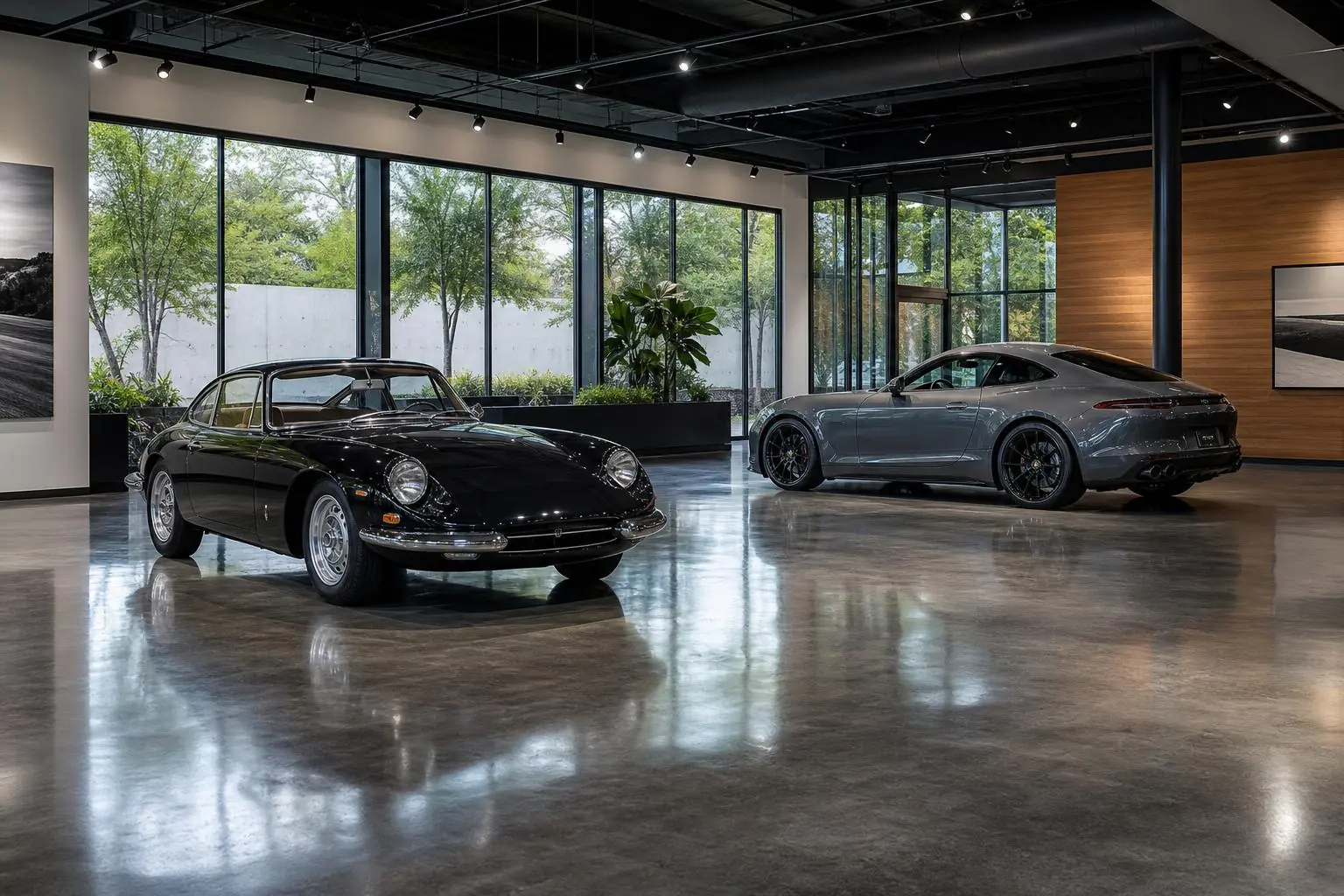
The best car showroom flooring is usually polished concrete or a high-build epoxy system. Polished concrete is extremely durable, reflective and low maintenance, while epoxy and metallic coatings offer custom colors and a seamless, stain-resistant surface. The right choice depends on the slab, the brand look, tire marking, and how the floor will be cleaned.
What a Showroom Floor Needs to Do
A showroom floor is part of the product presentation. It has to reflect lighting well, stay clean, resist hot tires and fluid drips, and handle vehicles moving in and out without scuffing or lifting. It also has to be safe for customers walking in street shoes, sometimes on wet days.
- Reflectivity and clarity to make paint and chrome stand out
- Hot-tire and plasticizer resistance to avoid marking and lifting
- Chemical resistance to oil, coolant and cleaning products
- Slip resistance appropriate for public spaces
- Easy daily maintenance for staff
Polished Concrete for Showrooms
Polished concrete is created by grinding the slab with progressively finer diamond tooling, densifying it, and polishing it to the desired gloss. There is no coating to peel, which makes it a strong candidate for high-traffic dealerships.
Advantages
- Very long service life with routine maintenance
- No film to delaminate from hot tires
- Reflective finish that brightens the space
- Lower lifetime maintenance than waxed tile
Limitations
The look depends on the existing slab. Old patches, cracks and color variation will show. Polished concrete also needs a stain guard and prompt cleanup of oil spills. Learn more on our concrete polishing page.
Epoxy and Metallic Epoxy Showroom Floors
Epoxy systems create a seamless colored surface that hides slab imperfections. Metallic epoxies add depth and movement that many collectors and specialty brands love.
Advantages
- Full control over color and pattern
- Seamless, non-porous surface that resists stains
- Can cover heavily patched or worn concrete
Limitations
Coatings can scratch and will eventually need a topcoat refresh. Some tires can leave marks on softer finishes, so a hard urethane or polyaspartic topcoat is usually specified for showrooms.
Side-by-Side Comparison
| Factor | Polished concrete | Epoxy / metallic |
|---|---|---|
| Look | Natural, reflective, industrial-modern | Custom color, high gloss, decorative |
| Hides slab flaws | Limited | Very well |
| Hot-tire resistance | Excellent (no film) | Good with proper topcoat |
| Maintenance | Auto-scrubber, periodic burnishing | Neutral cleaner, periodic recoat |
| Downtime to install | Several days depending on size | Several days plus cure time |
Safety and Slip Resistance in Public Spaces
Showrooms are walking-working surfaces for staff and public spaces for customers. The >OSHA walking-working surfaces rules require employers to keep floors clean, free of hazards and, as far as possible, dry. Polished concrete is not inherently slippery when dry, but water, oil or tire dressing on any smooth floor increases slip risk.
Entry mats, prompt spill cleanup and choosing a topcoat with a slip-resistant additive near doors all help.
Lessons From Museum and Collector Floors
Car museums and private collections are especially demanding because vehicles sit for long periods. Static tires can leave marks on soft coatings, and display lighting shows every swirl. Our Shelby American Car Museum project is a good example of how prep and finish selection work together for a space where the floor is part of the exhibit.
The >American Concrete Institute provides industry guidance on slab quality and finishing that contractors draw on when planning large polished floors.
Planning the Project Around Your Business
Showrooms rarely have the luxury of closing for weeks. Planning the installation around sales and service schedules makes a big difference.
Phasing the work
Large showrooms can be completed in sections, moving vehicles from one zone to another as each area is finished. Polished concrete is often easier to phase because there is no coating cure window, while epoxy zones need to stay closed until the topcoat has cured enough for vehicles.
Lighting check
Before choosing a gloss level, look at the floor under the actual showroom lighting. High-gloss floors reflect fixtures sharply, which looks dramatic but also highlights every tire track. Many dealers choose a medium-high gloss for a balance of shine and forgiveness.
Service drive and transition areas
The service drive takes more abuse than the display floor, with fluids, hot tires and heavy foot traffic. Some owners use polished concrete on the display floor and a heavier coating system with more texture in the service lane, so each area is matched to its job.
Ongoing maintenance plan
Ask for a written care plan with cleaner recommendations and burnishing or recoat intervals so staff know exactly how to keep the floor looking as good as launch day. A floor that is cleaned the same way every day ages evenly, while inconsistent routines leave dull lanes and patchy gloss that customers notice under bright display lighting.
Why Englewood Property Owners Choose True Finishing
True Finishing has prepared, repaired and finished concrete floors across the Colorado Front Range and mountain towns since 2007. Our crews work in Englewood and nearby communities, and we handle every step ourselves: moisture testing, grinding, crack and joint repair, and the final finish. That one-stop approach means nobody hands off a slab they did not prepare.
Our work on automotive and collector spaces, including showrooms and private garages near Englewood, has taught us how much tire marking, lighting and maintenance routines shape the right floor choice. You can see how we approach larger jobs in our Shelby American Car Museum project.
Ready to talk about your floor? Request a free estimate or call 303-761-1012. We will look at the slab, test it, and give you a written scope with clear pricing.
Frequently Asked Questions
What is the best flooring for a car showroom?
Polished concrete and high-build epoxy systems are the two most common choices. Polished concrete offers durability and reflectivity without a coating to wear off. Epoxy and metallic systems give custom colors and hide slab flaws. The best option depends on the slab condition, brand look, and maintenance routine.
Do tires mark polished concrete?
Polished concrete resists hot-tire pickup because there is no film to soften, but rubber can leave surface marks that clean up with proper pads and cleaners. A quality stain guard makes cleanup easier. Coated floors with soft topcoats are more prone to marking, which is why hard topcoats are specified.
Is epoxy flooring good for dealerships?
Yes, when it is a professional, high-build system with a hard urethane or polyaspartic topcoat over a properly ground slab. Epoxy creates a seamless, stain-resistant surface and allows brand colors. It will need periodic topcoat maintenance in high-traffic drive lanes to keep its gloss.
How do you maintain a polished concrete showroom floor?
Daily dust mopping or auto-scrubbing with a neutral cleaner keeps the surface clear of grit. Periodic burnishing restores gloss, and a stain guard is reapplied as needed. Wipe oil and coolant drips quickly, because polished concrete is dense but still slightly porous compared with a coating.
Does True Finishing do commercial showroom floors?
Yes. True Finishing installs polished concrete and epoxy floors for dealerships, museums and private collections in Englewood, Denver and across the Front Range. Call 303-761-1012 or request a free estimate through our contact page to discuss your space.