
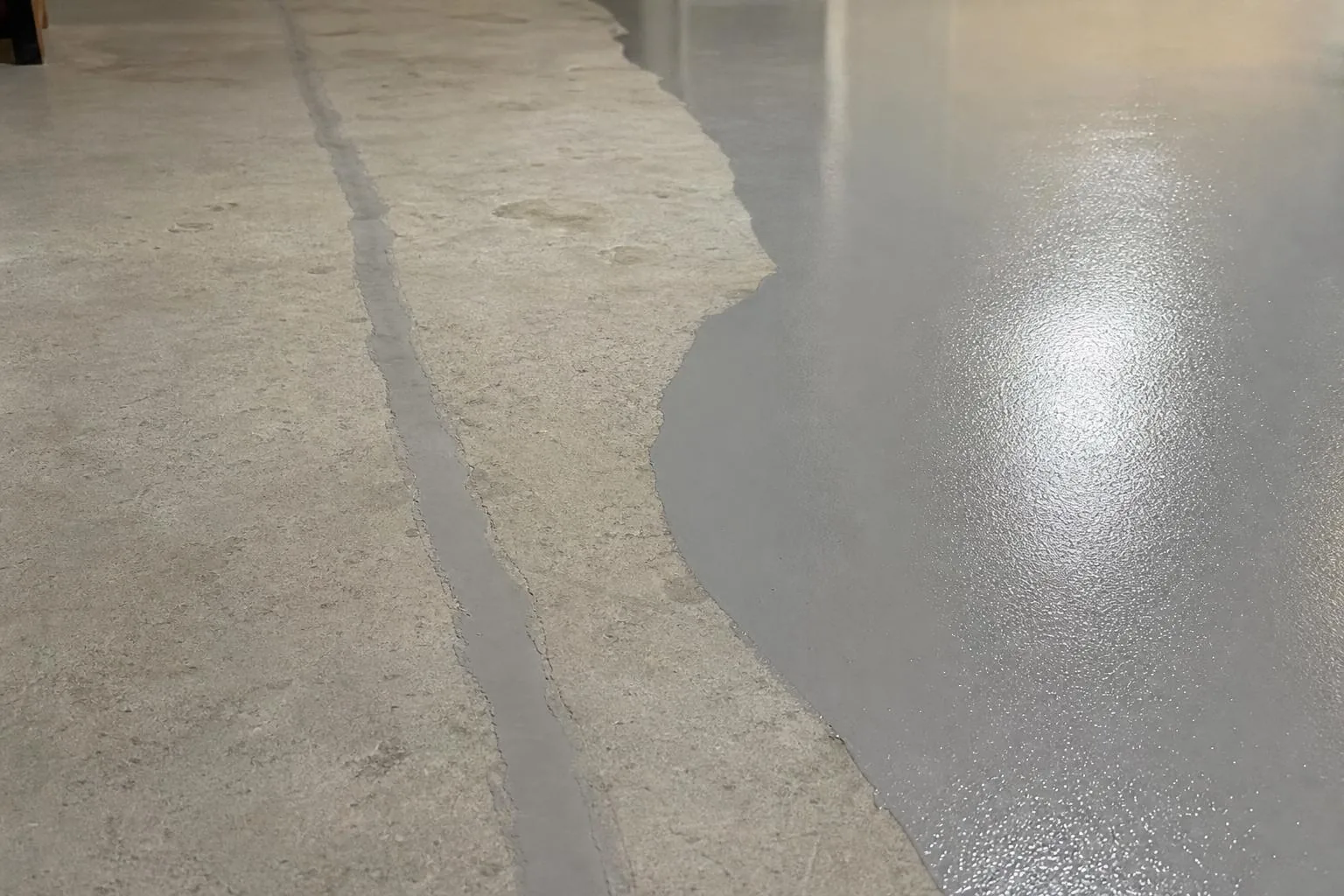
Expansive clay soils, common along the Colorado Front Range, swell when wet and shrink when dry, which can crack and heave interior slabs. Before coating or polishing a cracked floor, determine whether cracks are still moving, address drainage and structural issues, then use the right repair: rigid fills for stable cracks and flexible fillers or joints for active ones.
Why Colorado Has So Many Cracked Slabs
Large parts of the Front Range sit on clay-rich soils and claystone bedrock that change volume with moisture. The >Colorado Geological Survey describes swelling soils as one of the most costly geologic hazards in the state, damaging foundations, slabs and pavements.
When these soils get wet from lawn irrigation, poor gutters or snowmelt, they expand and push up on slabs. When they dry, they shrink and leave voids. Interior slabs in basements and garages are often “floating” slabs that are not tied to the foundation, so they move independently and crack.
Common signs of soil movement
- Cracks that widen over months or change height from side to side
- Doors that stick or drywall cracks above basement doors
- Slabs that slope noticeably toward or away from walls
- Gaps between the slab and baseboards or partition walls
Stable Cracks vs. Moving Cracks
Not every crack is a soil problem. Concrete shrinks as it cures, and many hairline cracks are simply shrinkage cracks that stopped moving years ago. The key question before any floor coating or polishing work is whether the crack is still active.
| Crack type | Typical signs | Typical repair before finishing |
|---|---|---|
| Shrinkage crack | Hairline, random, no height difference | Rigid epoxy or polyurea fill, ground flush |
| Settlement crack | Wider, may have edge displacement | Grind flush, fill, sometimes stitch |
| Active heave crack | Growing, uneven edges, recurring | Address cause; flexible filler or honor as joint |
How to monitor a crack
Mark the ends of the crack with a pencil and date it, and measure the width at a few points. Check again over a few months. Growth means the slab is still moving.
Fix the Cause Before the Floor
Coatings and polish do not stop soil movement. If moisture is reaching expansive soil under the slab, a new floor finish will crack along with the concrete. Start with the basics:
- Extend downspouts several feet away from the foundation.
- Check that grading slopes away from the house.
- Avoid heavy irrigation right next to the foundation.
- Have a structural engineer evaluate large or growing cracks, especially if walls are affected.
The >American Concrete Institute publishes guidance on cracking causes and repair that engineers and contractors rely on when assessing slabs.
Repairing Cracks Before Epoxy or Polishing
Once movement is understood, crack repair is part of normal surface preparation. Our floor restoration team typically follows these steps:
- Chase the crack with a crack-chasing blade to remove loose material and create a clean channel.
- Vacuum thoroughly so the filler bonds to sound concrete.
- Fill with the right material: rigid epoxy or polyurea for stable cracks, a semi-rigid or flexible product where some movement is expected.
- Grind flush so the repair disappears under the coating or reads cleanly in a polished floor.
Honoring joints
Control joints and active cracks should usually be carried through the coating, then filled with a flexible joint sealant. Coating straight over them often produces a reflective crack in the new finish.
Can You Still Get a Beautiful Floor on a Cracked Slab?
Usually yes. Flake epoxy systems hide repaired cracks very well. Polished concrete will always show some character, and many owners like that honest look. Metallic epoxy and microtoppings can also mask repairs.
The one situation where a finish is not the right answer is an actively heaving slab with ongoing water issues. In that case, the money is better spent on drainage or structural work first.
Budgeting for Crack Repair Before a New Floor
Crack repair is usually a modest line item compared with the coating or polish itself, but it varies with the number and type of cracks.
| Repair scope | Typical approach | Typical Front Range estimate (2026) |
|---|---|---|
| A few hairline cracks | Fill and grind during prep | Often included in prep pricing |
| Multiple chased and filled cracks | Chase, fill, grind flush | About $3 to $8 per linear foot |
| Stitching across wide cracks | Steel staples set in epoxy | About $15 to $35 per linear foot |
| Uneven slab sections | Grinding or self-leveling underlayment | Quoted after inspection |
What raises the cost
Height differences across a crack, crumbling edges and repeated old repairs that have failed all add labor. If an engineer recommends structural work, that should be completed and allowed to settle before finishing.
What saves money
Handling drainage first, repairing cracks in the same mobilization as grinding, and choosing a forgiving finish like flake epoxy all help keep the total reasonable.
Why Castle Rock Property Owners Choose True Finishing
True Finishing has prepared, repaired and finished concrete floors across the Colorado Front Range and mountain towns since 2007. Our crews work in Castle Rock and nearby communities, and we handle every step ourselves: moisture testing, grinding, crack and joint repair, and the final finish. That one-stop approach means nobody hands off a slab they did not prepare.
Around Castle Rock and Douglas County, we routinely evaluate cracked basement and garage slabs and tell homeowners honestly when a structural engineer should look first. You can see how we approach larger jobs in our Highlands Ranch Recreation Center project.
Ready to talk about your floor? Request a free estimate or call 303-761-1012. We will look at the slab, test it, and give you a written scope with clear pricing.
Frequently Asked Questions
Does expansive soil cause cracks in basement floors?
Yes. Expansive clay soils swell when they absorb water and shrink as they dry. Interior basement and garage slabs that float on these soils can heave and crack as moisture changes. The Colorado Geological Survey identifies swelling soils as a major hazard along the Front Range, especially in areas with clay and claystone.
Can you epoxy over a cracked concrete floor?
Yes, after the cracks are evaluated and repaired. Stable cracks are chased, filled with a rigid material and ground flush before coating. Actively moving cracks need their cause addressed and are often treated as joints with flexible sealant, because a coating alone will crack again if the slab keeps moving.
How do I know if a slab crack is still moving?
Mark the crack ends with the date, measure its width and check again over several months. A crack that grows longer, wider or develops a height difference is still active. Cracks that look the same after a season are usually stable shrinkage or settlement cracks suitable for normal repair.
Should I call an engineer for a cracked slab?
Call a structural engineer if cracks are wider than about a quarter inch, are growing, have a noticeable height difference, or come with sticking doors and wall cracks. Those signs point to soil or structural movement. Small hairline cracks without displacement usually only need routine repair before a new floor finish.
Does True Finishing repair cracks before coating?
Yes. Crack evaluation and repair are part of every True Finishing coating and polishing project. We chase, fill and grind cracks flush, honor active joints, and tell you when an engineer should look first. Call 303-761-1012 for a free estimate in Castle Rock or anywhere on the Front Range.